UI Generator: Web Based Project
I brought principles and innovations from architecture, to be used in UI design variation.
Goal
I took a peek into the process that Architecture, engineering, CAD design and other disciplines creating the tangible world around us are going through. There has been an amazing shift in the way software is used in those areas. Perhaps the world of design could move beyond used software to simply push pixels around.
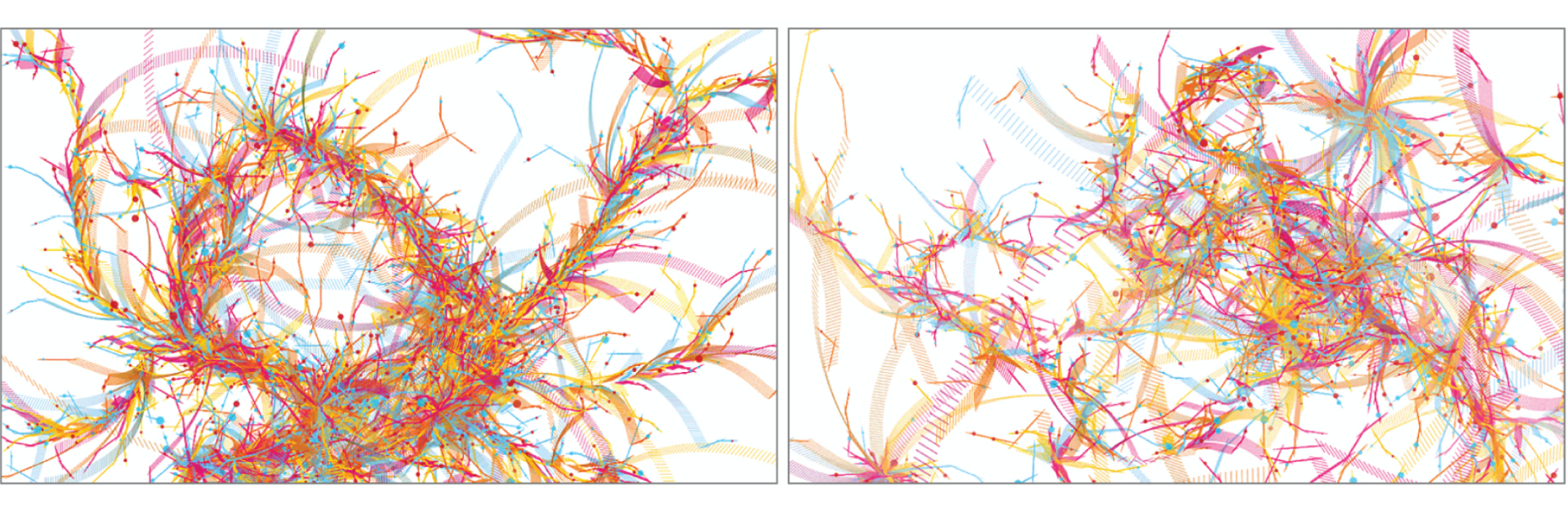
generative art forms inspired me - drawing created based on JavaScript algorithm http://alumni.media.mit.edu/~jacobsj/resources/jacobsj_thesis.pdf
Moving forward, I stumbled upon are a few different things that triggered my interest: Parametricism, Algorithmic Modelling and Generative Design. I felt like I discovered pure magic. There already is software out there that supports people in that initial stage, that used to be controlled by humans only. Here’s a quick overview.
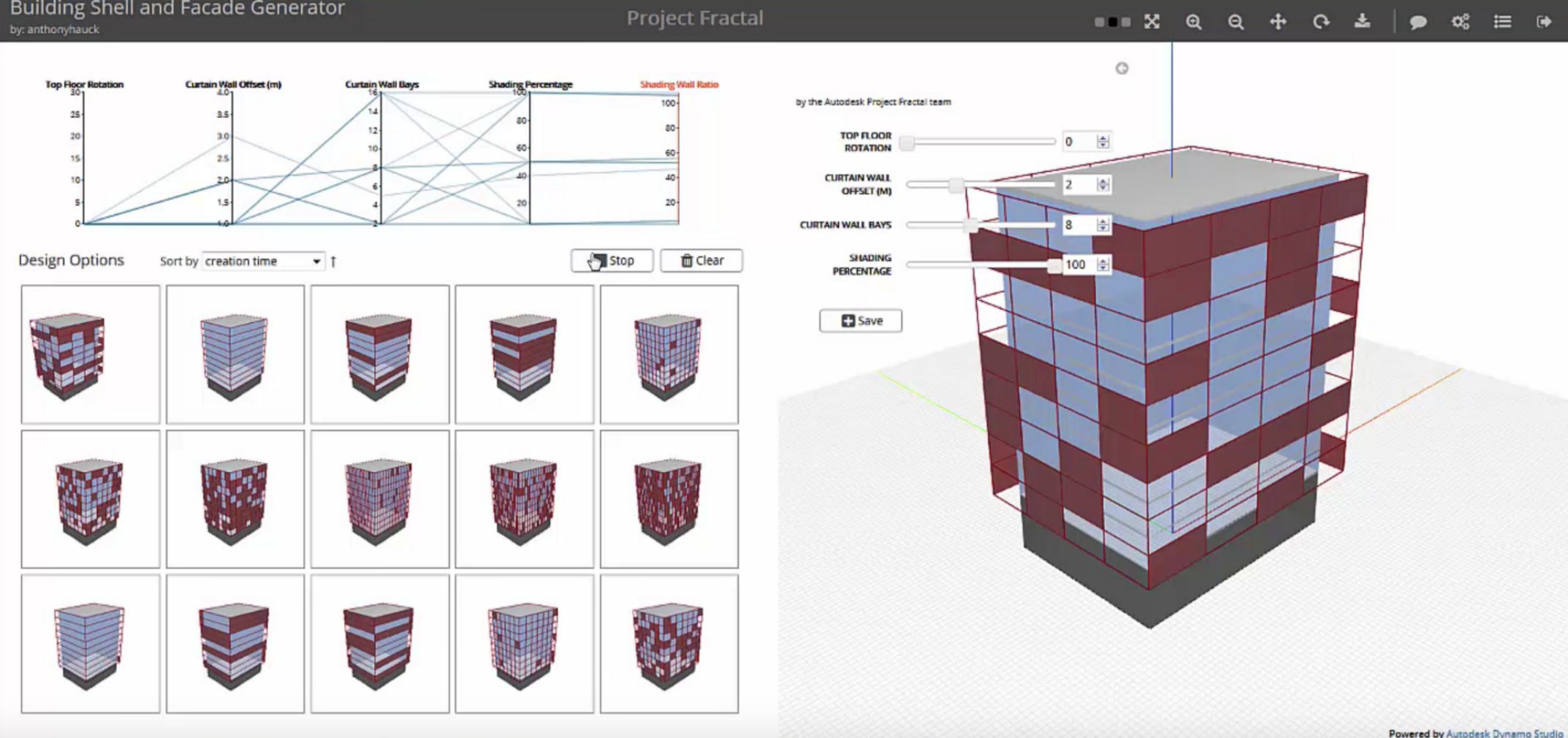
Generative design iterates through all possible variations of a complex algorithm/parameter combination. Designers simply visualise all possible iterations, without manually changing inputs. In this case the only inputs are the boundaries of explorations. In the end, it’s not just about changing a size of a wall in a 3D design file anymore, it’s about the way that change could be done in 1000 ways while taking into account that the building has glass walls, 20 floors and two sets of staircases.

Let’s get more practical and think of a simple button. The word itself makes your mind search in its long term memory to retrieve the images of coloured rectangles with text in the middle. It is almost humanly impossible to create an entirely different usable button, as it would be to redefine the colour red. If I was given 3 minutes to explore those in a design software, I’d probably come up with something like the image above.
We could approach the same task by using a computer. The approach would be very similar in the beginning. First it will start dissecting the button to find its core parts. It would then play with those to create a variety of options. In the same way we can feed those core parts to a computer, which would mathematically combine all parameters in all sorts of ways. The more parameters and logical interconnections we would provide, the larger and more surprising the outcome would be. If the shape of the button becomes a parameter, constraining the text to always be enclosed in the shape, at padding X and type Y, we could see a variety of outcomes.
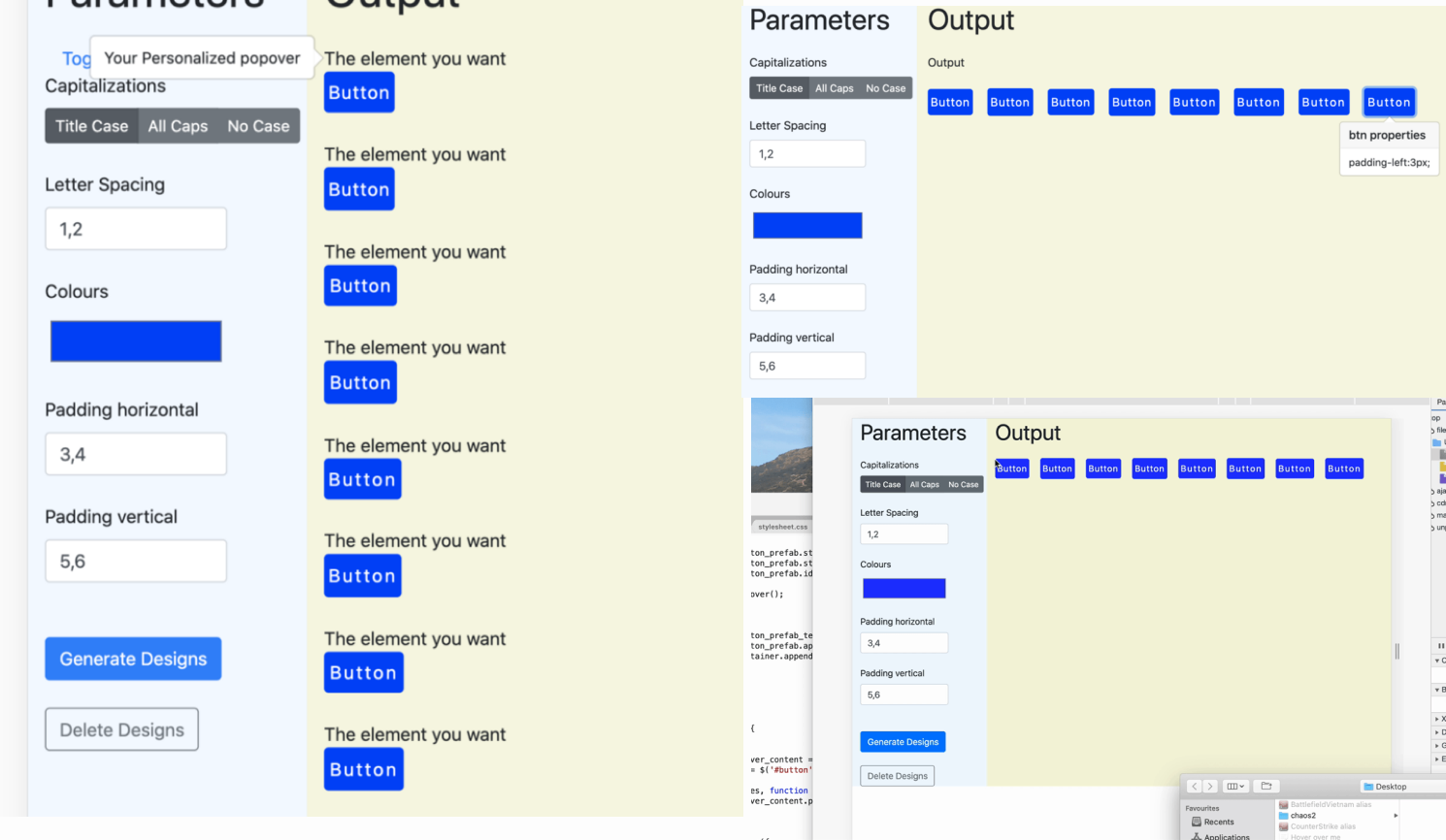
I gave this logic a first try in JS, using a GitHub repository. The outcome was primitive, but promising, as seen above. By tweaking it a bit more I ended up with the following version.
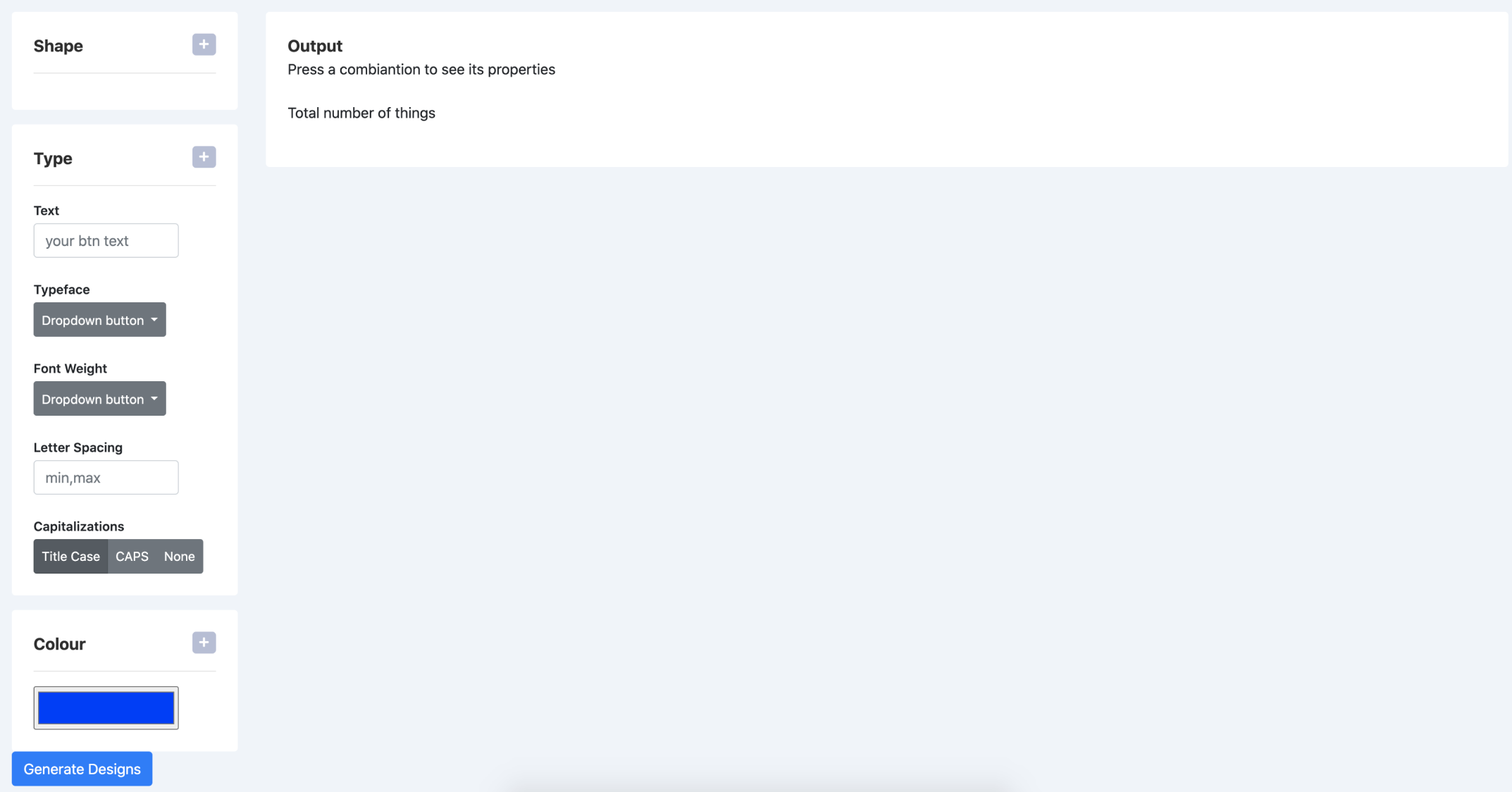
Add your parameters, adjust your button properties and then press the Generate Designs button. The algorithm creates all possible combinations of those parameters.
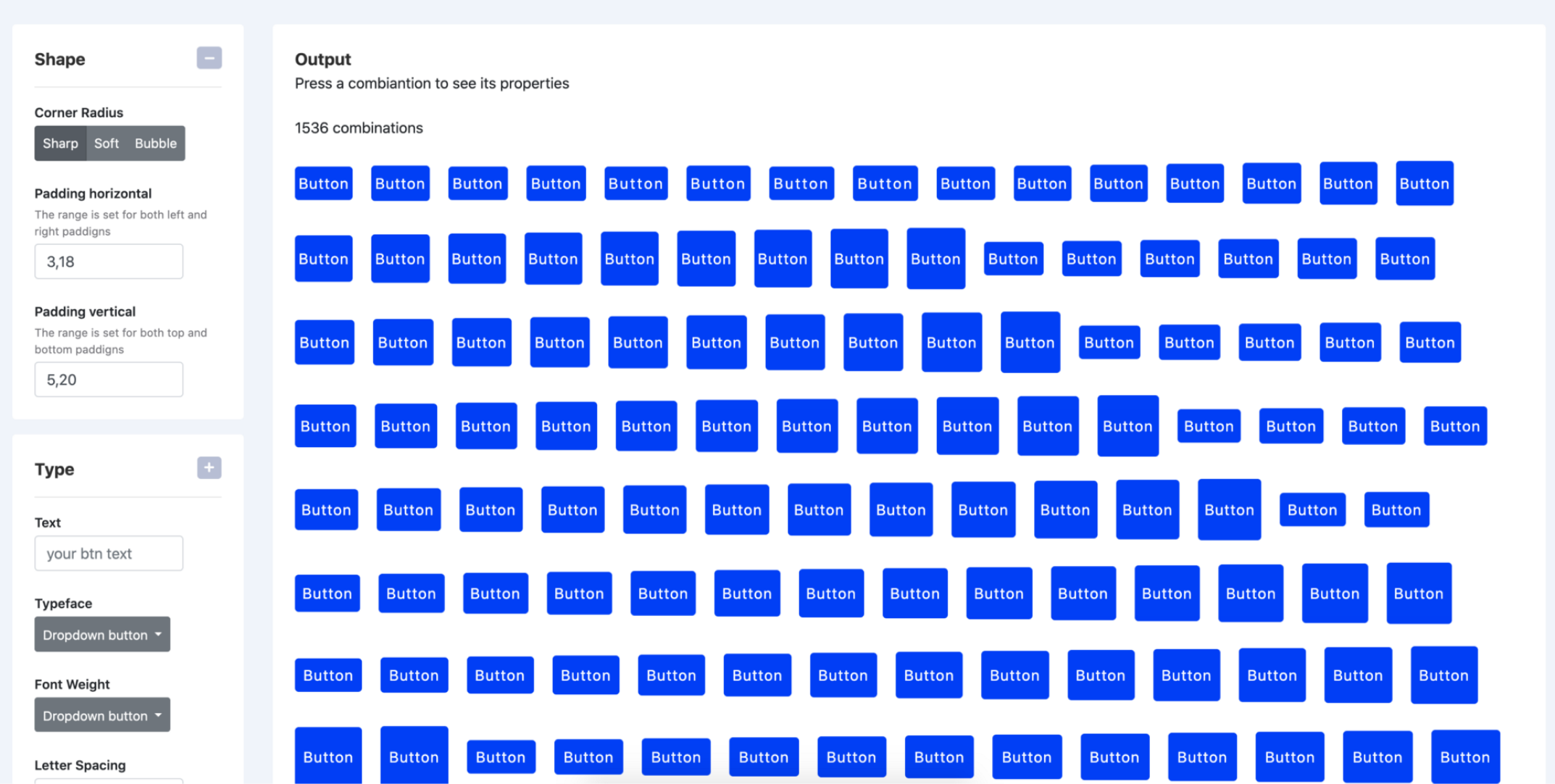
this version is live - check the project description for the link
Most of those versions look terrible and nobody would ever use them. However, some are interesting depending on context. Imagine having more parameters, also related to user findings. What if the software would create button varieties that a designer can actually use later on ? What if the software would learn what the designer is generally picking, and creates consistent UI elements in the future ? Then designers can focus on bringing value, having a readily available UI kit.